Section 2 of 5 · about 2 min read

Sniffing, Foraging & Food Puzzles

Sniff walks, scatter feeding, DIY puzzles and scent games.

Supervise your dog with any new toy, chew or puzzle until you know how they use it. If your dog is on a special diet or has a health condition, check with your vet before using food-based enrichment.

Lesson 1

The power of the nose

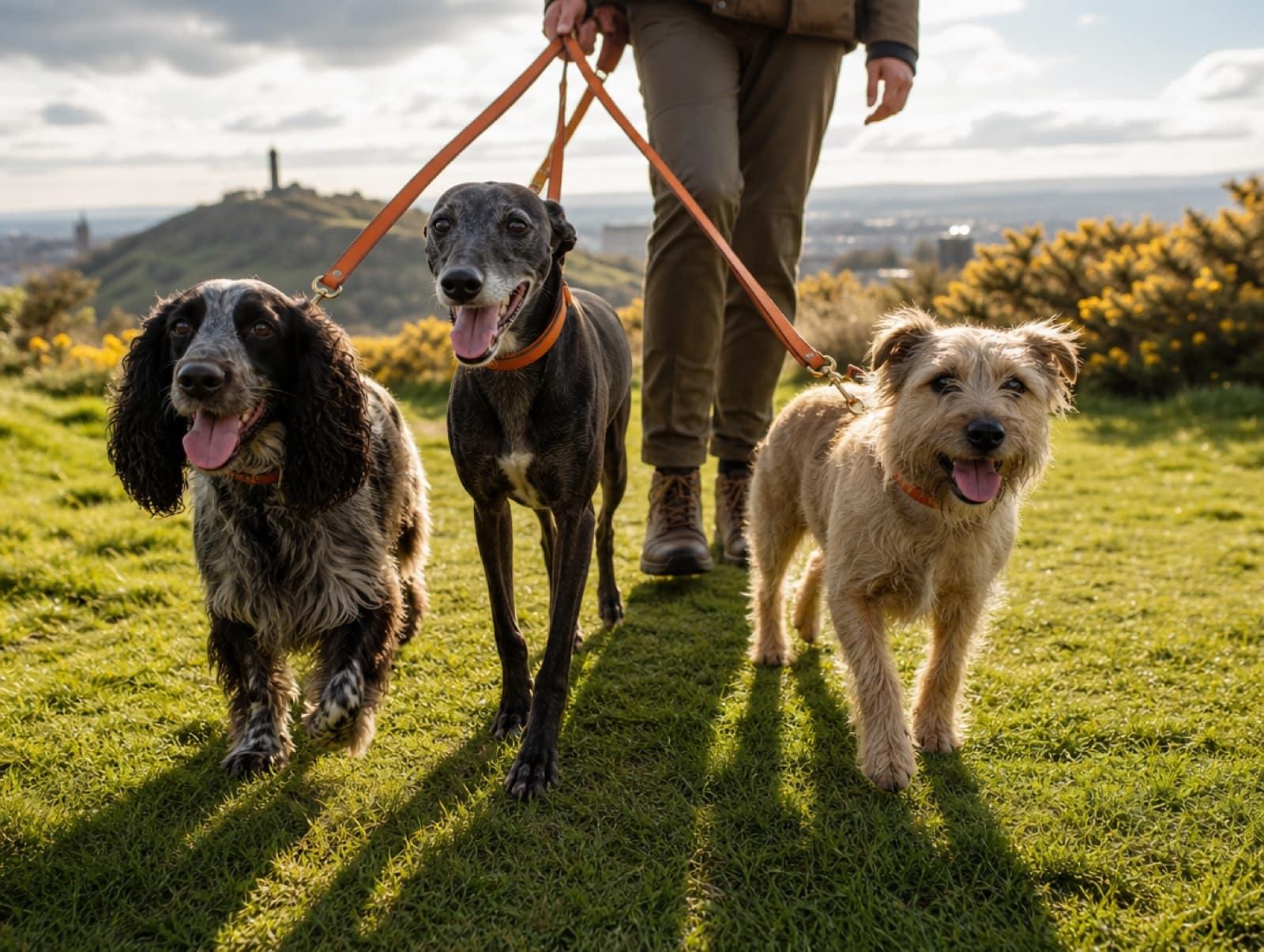
A dog’s nose is their main way of understanding the world. Sniffing tells them who passed by, what happened and what has changed. Many trainers find that a good sniff helps dogs relax and leaves them pleasantly tired. Try a sniff walk, sometimes called a sniffari. Choose a quiet route, use a longer lead or a long line where it’s safe, and let your dog set the pace. Stop when they stop. You might not cover much ground, and that’s the point. The walk is for their nose, not your step count.
Lesson 2

Scatter feeding and snuffle mats

Scatter feeding is the simplest foraging game. Toss a handful of your dog’s dry food across a clean patch of lawn or a rug and let them hunt it out. Start with a small area so it’s easy, then spread it wider as they get the hang of it. A snuffle mat, a mat of fabric strips, hides food in its folds so your dog has to nose it out. Supervise, especially at first, and put the mat away afterwards so it doesn’t become a chew toy. Wash it regularly.

Lesson 3

DIY food puzzles

You can make great puzzles at home. Put treats in some cups of a muffin tin and cover every cup with toys or balls too big to swallow, so your dog has to lift them out. Scrunch treats into paper inside a cardboard box, or nest a few boxes together. Remove staples, tape, plastic and labels first, and always supervise. Many dogs happily shred cardboard, but if yours starts swallowing it, swap to a different game. A toilet roll tube with the ends folded in makes a quick puzzle too.

Lesson 4

Use the daily allowance and build slowly

Food games are a lovely way to serve meals, but extras add up. Weigh out your dog’s daily food in the morning and use part of it for puzzles, scatter games and training. That helps keep your dog at a healthy weight. If you do use extra treats, take a little off their meals. Start every new puzzle easy so your dog wins quickly. Once they’re confident, make it a little harder: more covers, a wider scatter or a trickier box. If your dog gives up or gets frustrated, go back a step.

Lesson 5

Scent games: find it

“Find it” is a brilliant first scent game. Show your dog a treat, say “find it” and toss it a short way. Repeat a few times. Next, place a treat just out of sight while they watch, then while they wait behind a door or with a helper. Gradually hide treats in harder places around a room. Keep sessions short and finish while they’re still keen. Later, you can teach them to find a favourite toy. Only hide food where it’s safe to search, away from bins, wires and medicines.

Practise

Making a muffin tin puzzle

Put these steps in order to build and play a muffin tin puzzle.

  1. 1Put the tin on the floor and let your dog work it out while you watch
  2. 2Praise them, and lift a cover to help if they get stuck
  3. 3Pick up the tin and toys once they’ve finished
  4. 4Measure out part of your dog’s daily food allowance
  5. 5Drop a few pieces into some of the muffin tin cups
  6. 6Cover every cup with a toy or ball too big to swallow

Foraging quiz

Question 1 of 4

What is a sniff walk, sometimes called a sniffari?

Section revision

Score 70% or more to pass this section.

Question 1 of 8

Which is the simplest foraging game to start with?

Know someone who’d find this useful?WhatsAppFacebookEmail
Small numbers, big days
Zoomies: confirmed
Out on the hills
Ball is life
Settled at home
Best friends since Tuesday
Trail days
Little paws, big world
Known by name