Section 6 of 8 · about 2 min read

Training Through the Stages

Force-free training from 8 weeks to adulthood, problem behaviours and brain games.

This guide is for information only. It doesn’t replace advice from your vet or a qualified behaviourist — if you’re ever worried, call your vet.

Lesson 1

Training is bonding

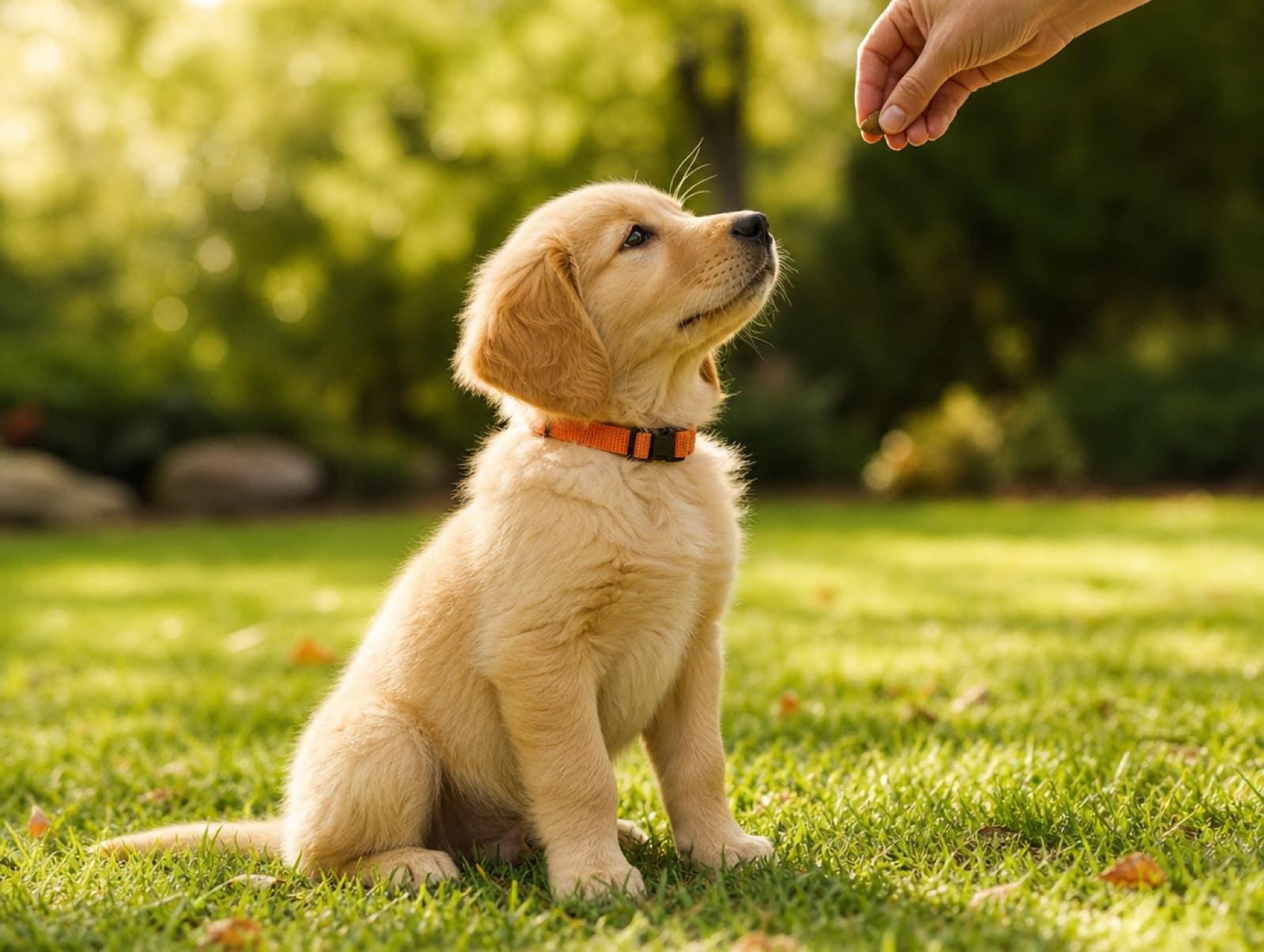
Training is a dog’s love language — structure, guidance and consistency are where real trust is built. ORLAGH’S uses positive reinforcement only: no force, fear or dominance. Reward the behaviour you want immediately, using a marker word like “Yes!” to bridge the timing. Keep commands short and use the same word each time. Train in sessions of 5–10 minutes, 2–3 times a day, and always end on a positive note. Celebrate small wins — even a 3-second sit!
Loading the rest of this section…

Practise

Puppy development timeline

Put these typical milestones in the order you’d expect them.

  1. 112 weeks: knows sit and come, sleeping through the night
  2. 21 year: basic obedience mastered, behaviour stabilising
  3. 316 weeks: learning stay, drop it and lead manners
  4. 48–10 weeks: knows their name, beginning potty training
  5. 56 months: recall improving, crate trained

Problem? Solution!

Biting hands and feet

1 of 7 · tap the card to turn it

Trainer’s toolkit

Question 1 of 5

How long should training sessions be for a young puppy?

Section revision

Score 70% or more to pass this section.

Question 1 of 8

What is the core of ORLAGH’S training approach?

Know someone who’d find this useful?WhatsAppFacebookEmail
Small numbers, big days
Zoomies: confirmed
Out on the hills
Ball is life
Settled at home
Best friends since Tuesday
Trail days
Little paws, big world
Known by name