Section 3 of 7 · about 1 min read

Positive reinforcement & timing

Why rewards work, how to mark the moment, and setting up sessions for success.

This course is general guidance. If your dog shows sudden behaviour changes, pain, fear or aggression, speak to your vet and a qualified, reward-based behaviourist.

Lesson 1

Why rewards work

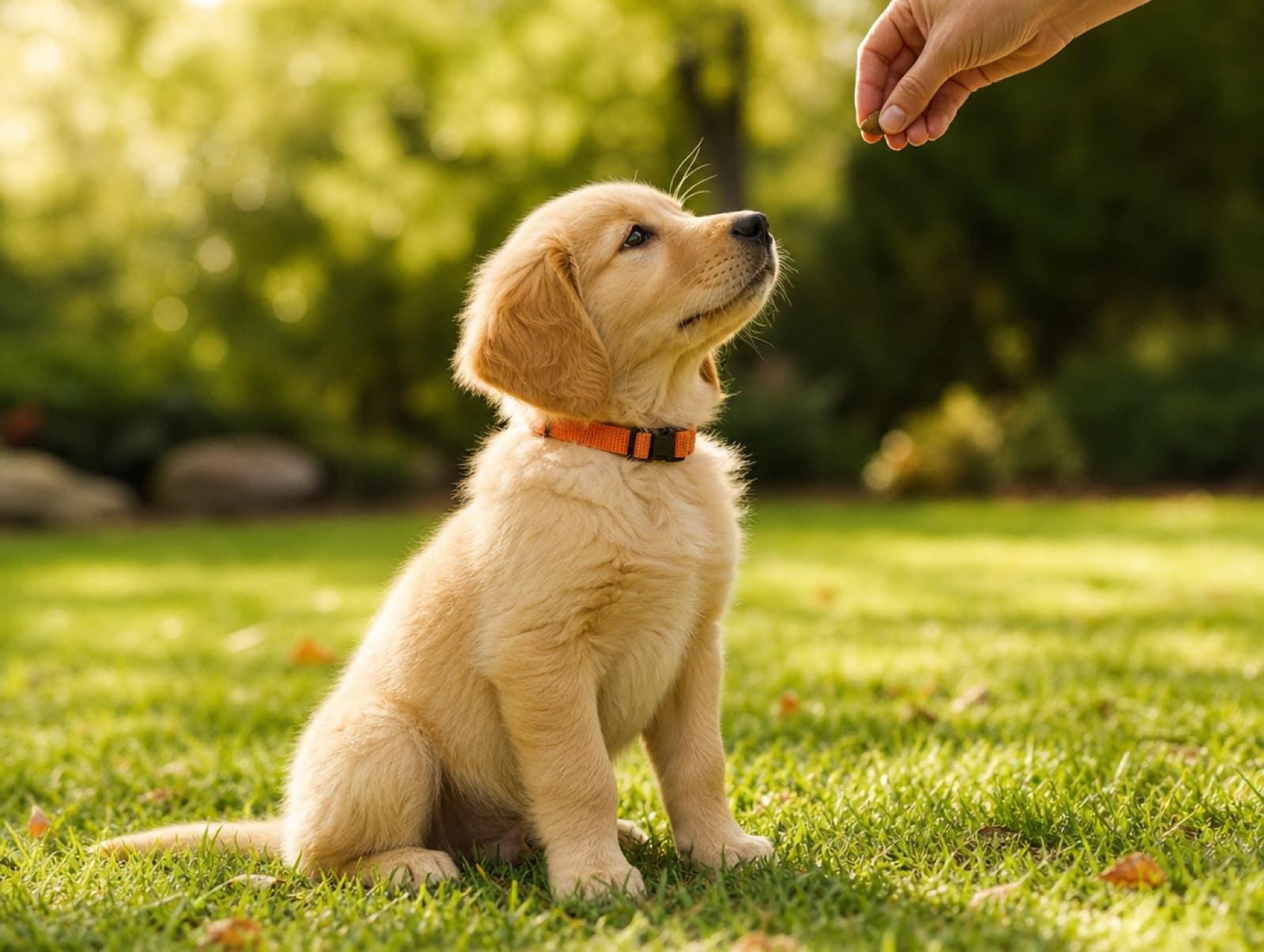
Positive reinforcement means adding something your dog loves straight after a behaviour, so that behaviour happens more. Rewards can be food, toys, play, praise, sniffing or the chance to greet a friend. Your dog decides what counts as a reward, not you – a dry biscuit may not compete with a squirrel. Rewards build a dog who wants to work with you, and research links reward-based training with fewer behaviour problems than harsh methods.
Lesson 2

Timing and markers

Dogs connect a reward with whatever they were doing in the second or two before it arrived. That’s tricky when you’re fumbling for a treat, so trainers use a marker – a clicker or a short word like “yes!” – at the exact moment of the right behaviour, then deliver the reward. Charge the marker first by pairing it with treats several times. Think of it as a camera shutter: it captures the precise moment you liked.

Lesson 3

Setting up great sessions

Keep sessions short – two to five minutes is plenty – and stop while your dog is still keen. Start somewhere quiet, then gradually add distance, duration and distraction one at a time. Aim for around eight successes out of ten; if your dog struggles, make it easier. A predictable daily routine for meals, walks, toilet breaks and rest also helps your dog feel secure and ready to learn.

Lesson 4

Why we avoid punishment

Shouting, leash jerks, spray bottles, shock or prong collars might stop a behaviour in the moment, but they don’t teach what to do instead. They can create fear, damage trust and make behaviour worse, especially aggression. When something goes wrong, calmly interrupt, redirect to a behaviour you like, reward that, and manage the environment so the mistake is harder to repeat.

Practise

Charge your marker

Put the steps for teaching your dog what “yes!” (or a click) means in order.

  1. 1Pause for a moment and repeat around ten times
  2. 2Test it: say “yes!” when your dog is looking away
  3. 3If they whip round expectantly, the marker is charged
  4. 4Prepare ten small, tasty treats in a quiet room
  5. 5Say “yes!” once in a happy, clear voice
  6. 6Give a treat within a second

Reward wisdom

Question 1 of 5

Your dog ignores dry kibble in the park but loves it at home. What should you do?

Reward or not?

  • Praise alone is always enough reward for any dog.

  • Ending a session on a success helps your dog stay keen.

  • Leash jerks teach a dog what you want them to do instead.

  • You should add distance, duration and distraction one at a time.

  • A marker word should always be followed by a reward.

Section revision

Score 70% or more to pass this section.

Question 1 of 8

What does positive reinforcement mean?

Know someone who’d find this useful?WhatsAppFacebookEmail
Small numbers, big days
Zoomies: confirmed
Out on the hills
Ball is life
Settled at home
Best friends since Tuesday
Trail days
Little paws, big world
Known by name