Section 2 of 4 · about 2 min read

Paw & Body Tricks

Nose touches, waves, cover-your-eyes, back up and weaving through legs.

Keep sessions short and happy, never force your dog into a position, and check with your vet before teaching jumping or balancing tricks to puppies, older dogs or dogs with joint or back problems.

Lesson 1

Nose targeting: the building block

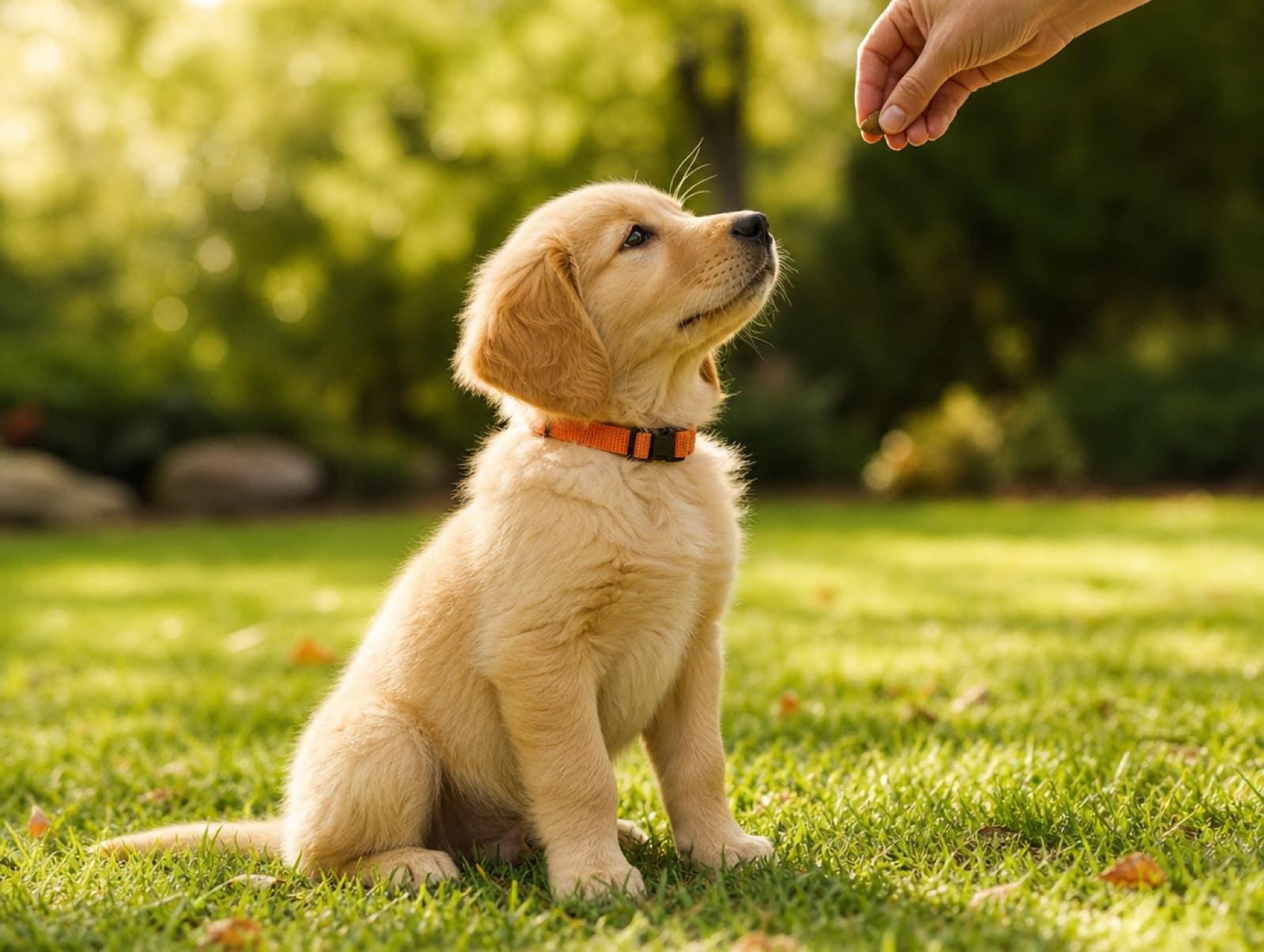
Teaching your dog to touch their nose to your palm (sometimes called “boop” or “touch”) unlocks loads of other tricks. Hold a flat hand a few centimetres from their nose. Most dogs sniff it out of curiosity, so mark and reward that touch. Move your hand a little further each time. Later, you can transfer the touch to a sticky note, a bell or a light switch.
Lesson 2

Paw tricks: wave, high five and salute

Start with a paw-give: hold a treat in a closed fist low down and wait for a paw to paw at it, then mark. Raise your hand slightly so the paw lifts higher for a high five. For a wave, move your hand away just before contact so the paw waves in the air. A “salute” or “shy” is shaped by placing a small sticky note on the muzzle and rewarding the paw that swipes it.

Lesson 3

Back up and body awareness

Many dogs don’t realise they have back legs! Teaching a backwards walk improves coordination. Stand facing your dog in a narrow space, like a hallway, and step gently towards them. Mark any backward step and toss the treat behind them. Build up to several steps. Body awareness tricks like this are great for confidence and help with tricks like crossing paws and spinning.

Lesson 4

Weaving and peekaboo

For leg weaves, stand with feet apart and lure your dog through the gap with a treat, then around one leg. Step forward with the other leg and lure through again. For peekaboo, lure your dog through your legs from behind and pause them in a stand, head peeping out at the front. Keep movements slow and smooth so your dog never feels squashed.

Lesson 5

Sit pretty and joint care

Sitting up on the haunches, sometimes called “beg” or “sit pretty”, needs real core strength. It isn’t suitable for every dog. Puppies, older dogs, long-backed breeds and dogs with hip, back or knee problems should skip it unless your vet agrees. If your dog is fit, build up slowly with a support such as your hand or a wall behind them, and only hold it for a second or two at first.

Practise

Teaching a nose touch

Put the steps for teaching “touch” in the right order.

  1. 1Move your hand a little further away or to the side
  2. 2Say “touch” just before presenting your hand
  3. 3Transfer the touch to an object like a sticky note
  4. 4Hold a flat palm a few centimetres from your dog’s nose
  5. 5Mark and reward the moment their nose touches your hand
  6. 6Repeat until they touch your hand eagerly

Paw & body check-in

Question 1 of 4

What simple object helps teach a “shy” trick where the paw covers the face?

Trick names

Touch / boop

1 of 6 · tap the card to turn it

Section revision

Score 70% or more to pass this section.

Question 1 of 8

To start a paw-give, where should your closed fist with a treat be?

Know someone who’d find this useful?WhatsAppFacebookEmail
Small numbers, big days
Zoomies: confirmed
Out on the hills
Ball is life
Settled at home
Best friends since Tuesday
Trail days
Little paws, big world
Known by name